
Your Essential Guide to Toyota Service in Gainesville, GA

Author: Milton Martin Toyota
For Toyota owners across Hall County, from the bustling streets of Gainesville to the growing communities of Buford and Cumming, keeping your vehicle in top condition is key to navigating life in North Georgia. The choice of where to service your Toyota is as vital as the vehicle itself, impacting everything from its performance on a rainy stretch of I-985 to its long-term reliability. With a legacy built on serving our neighbors, the team at Milton Martin Toyota has a deep, firsthand understanding of the challenges local drivers face and is uniquely qualified to share this comprehensive guide. We believe in empowering our community with knowledge, and this article is crafted to help you make the best decisions for your Toyota’s health.
Key Takeaways (TL; DR)
Here is a quick overview of what to remember when selecting a Toyota service center in the Gainesville area:
- North Georgia Weather Demands Special Care: Your Toyota needs specific attention to handle our region’s high humidity, sudden freezes, and pollen seasons, impacting everything from your A/C to your battery.
- Certified Technicians Are Non-Negotiable: Technicians receiving direct, ongoing training from Toyota are the only ones truly equipped to service complex systems like Hybrid Synergy Drive and Toyota Safety Sense™.
- Genuine Parts Preserve Your Investment: Using Genuine Toyota parts is the only way to guarantee a perfect fit, maintain peak performance, and ensure your vehicle’s factory warranty remains fully intact.
- Advanced Diagnostics Prevent Costly Errors: Certified centers use proprietary tools like Toyota Techstream, offering a level of accuracy that generic shops cannot match, crucial for precise software updates and repairs.
- A Documented Service History Enhances Value: Each service at a certified dealership is recorded in Toyota’s national database, creating a verifiable history that supports warranty claims and significantly boosts resale value.
- Integrity and Transparency Build Trust: A quality service center prioritizes clear communication, provides detailed estimates, and explains necessary work without pressure, focusing on a lasting relationship.
- Convenience Is Key for Your Busy Life: Look for amenities that fit a North Georgia lifestyle, including loaner vehicles, shuttle services, and straightforward online appointment scheduling.
What Are the Tangible Benefits of a Certified Toyota Service Center?
Choosing a certified Toyota service center provides distinct advantages that directly affect your vehicle’s safety, performance, and financial value. For drivers navigating the daily commute from Braselton or planning a weekend trip up to Lake Lanier, these benefits offer both peace of mind and measurable results. A certified facility is more than just a repair shop; it is a dedicated partner in maintaining the enduring quality of your Toyota.
Why Are Toyota-Trained Technicians Uniquely Qualified?
Toyota-trained technicians possess a degree of expertise that is simply unmatched by general auto repair shops. They participate in rigorous, continuous training directly from the manufacturer, covering every model from the hard-working Tundra to the ever-reliable Camry.
- Specialized Expertise: These professionals are masters of Toyota’s proprietary systems, including Hybrid Synergy Drive and the suite of features within Toyota Safety Sense™ (TSS). This focused knowledge is essential for accurate diagnostics and repairs that a general mechanic could easily miss.
- Up-to-Date Training: Technicians stay current on the latest Technical Service Bulletins (TSBs) and evolving repair methods. This ensures your vehicle receives the most effective care, such as the precise recalibration of a Lane Departure Alert system after a windshield replacement—a task demanding specific factory training and tools.
Does Using Genuine Toyota Parts Really Make a Difference?
Yes, it makes an enormous difference. Opting for Original Equipment Manufacturer (OEM) parts is one of the most critical steps you can take to protect your vehicle.
- Guaranteed Compatibility: Genuine Toyota parts are engineered to the exact specifications of your vehicle, ensuring a perfect fit and optimal performance. Aftermarket parts often have slight variations that can lead to premature wear, decreased efficiency, or even serious system failures.
- Warranty Integrity: When you have genuine parts installed at a certified center, your vehicle’s factory warranty is fully preserved. The use of many aftermarket components can void portions of your warranty, potentially leaving you responsible for costly related repairs.
How Does a Certified Center Protect My Vehicle’s Value?
Beyond addressing immediate repair needs, a certified service center plays a crucial role in safeguarding the long-term value of your Toyota.
- Verifiable Service Records: Every appointment is officially documented in Toyota’s national service database. This creates a complete and easily accessible maintenance history, a powerful selling point that can significantly increase your vehicle’s resale value, a factor often highlighted by resources like Kelley Blue Book.
- ToyotaCare Compliance: For new Toyota owners, all maintenance performed at a certified center meets the requirements of your complimentary ToyotaCare plan. This plan covers routine services and includes 24-hour roadside assistance, giving you one less thing to worry about.
How Does Certified Service Compare to Independent Garages in Gainesville?

When your Toyota needs maintenance, you face a choice: a certified dealership service center or a local independent mechanic. While many independent shops in places like Jefferson or Buford offer honest service, a significant gap exists in technology, training, and warranty adherence. The sophisticated engineering in today’s Toyota vehicles requires a level of specialization that only a certified center can consistently provide.
What Does “Toyota-Certified” Actually Mean?
Toyota Motor North America officially endorses a service department that is Toyota-certified. This is not merely a marketing phrase; it is a guarantee that the facility meets strict standards in several critical areas.
- Factory-Mandated Training: Technicians are required to complete and maintain certification in Toyota-specific programs that cover gasoline engines, hybrid powertrains, and all-electric systems. This education is ongoing to keep pace with new models and technologies.
- Exclusive Use of OEM Parts: The center is contractually obligated to use Genuine Toyota parts for all warranty-related work and is strongly encouraged to use them for every service to maintain vehicle integrity.
- Proprietary Diagnostic Technology: Certified centers are equipped with Toyota’s proprietary Techstream diagnostic software. This powerful tool communicates with your vehicle’s onboard computers on a much deeper level than generic OBD-II scanners, allowing for precise troubleshooting, software updates, and system calibrations.
- Warranty and Recall Compliance: All work is performed to exact factory specifications, ensuring it is compliant with factory warranties and any extended protection plans. These centers are also the only facilities authorized to perform safety recall repairs at no cost to you.
- Monitored Customer Satisfaction: Dealerships must maintain high Customer Satisfaction Index (CSI) scores, which are closely monitored by Toyota. This system holds them accountable for the quality of both their technical work and their customer service.
Comparison: Certified Toyota Service vs. Independent Repair Shops
| Service Criterion | Certified Toyota Dealership | Independent Mechanic |
|---|---|---|
| Technician Training | Factory-Certified: Continuously updated on all Toyota models, including hybrid and EV systems. | General Experience: May lack the model-specific training and tools for complex Toyota systems. |
| Parts Used | Genuine Toyota OEM Parts: These come with a manufacturer warranty and guarantee a perfect fit. | Aftermarket or Used Parts: These are of varying quality and may not perform to factory standards. |
| Warranty Protection | Full Compliance: All work is fully compliant with all Toyota warranty and maintenance plans. | Risk of Voiding Warranty: The use of incorrect parts or procedures can easily void your warranty. |
| Technology Access | Exclusive Access: Utilizes the Toyota Techstream diagnostic suite for deep-level analysis. | Limited to Generic Scanners: These can’t read all Toyota-specific codes or perform necessary software updates. |
| Recall/TSB Updates | Automatic Checks: Automatically checks for and performs open recalls and service bulletins. | No Access to System: Lacks access to Toyota’s internal recall system, meaning important updates are often missed. |
| Service Records | National Database: Logs all maintenance in Toyota’s official national database for a complete vehicle history. | Internal Records Only: Records are kept locally and are not part of a centralized, verifiable vehicle history. |
Your Toyota’s advanced systems, from the all-wheel drive that provides confidence on a rain-slicked GA-400 to the hybrid powertrain that saves you money on gas, depend on this level of precision. For North Georgia drivers, whose vehicles must perform reliably through humid summer commutes and icy winter mornings, this distinction is crucial.
How Does North Georgia’s Climate Affect Toyota Service Needs?
Living in the Gainesville area means your Toyota is exposed to a unique and demanding climate. From scorching, humid days that can push your A/C to its limits, to the sudden winter freezes that strain your battery, these extremes place specific stresses on your vehicle. A local Toyota service center understands these challenges intimately and can provide proactive maintenance to keep your car running smoothly year-round.
What Are the Key Winter Service Considerations for Our Area?
North Georgia winters can be unpredictable. While we may not get heavy snow, the frequent freeze-thaw cycles and occasional ice storms on roads like Thompson Bridge Road (GA-60) can take a toll.
- Battery Health: Cold snaps drastically reduce a battery’s ability to hold a charge and deliver cranking amps. Local service data shows that calls for dead batteries spike during the first deep freezes in January and February. A local service center will test your battery’s health and clean its terminals before winter sets in.
- Tire Performance and Traction: All-season tires can become rigid and lose crucial grip in freezing temperatures. A Gainesville-based service advisor can ensure your tire pressure is correctly adjusted, as it can fall by about 1 PSI for every 10-degree drop in temperature, impacting handling on cold, wet pavement.
- Fluid Viscosity: Engine oil and transmission fluid thicken in the cold, making it harder for the engine to turn over and circulate lubricants. Using the correct viscosity synthetic oil, as recommended by Toyota, is critical for protecting your engine during those chilly morning starts.
- Wiper and Washer Fluid Readiness: Frosty mornings and road spray from winter rain make clear visibility essential. Ensuring your wiper blades are in good condition and your washer fluid reservoir is full of a de-icing formula is a simple but vital safety check.
How Do Summer Heat and Humidity Impact Your Toyota?
Gainesville summers bring their own set of challenges with intense heat and high humidity, especially for commuters on I-985 or those heading to the North Georgia mountains.
- Engine Cooling System: Your engine works harder to stay cool in hot weather, particularly in the stop-and-go traffic around the Gainesville square. A complete service check should include inspecting coolant levels, hoses, and the radiator to prevent dangerous overheating.
- Air Conditioning Performance: A powerful A/C system is a necessity, not a luxury. A certified technician can check refrigerant levels and inspect the compressor and condenser to ensure it’s ready for the most humid days of August.
- Tire Pressure Management: Hot asphalt can cause the air inside your tires to expand, increasing pressure and the risk of a blowout. It’s important to check your tire pressure regularly throughout the summer months.
- Pollen and Air Filters: North Georgia’s notorious pollen season can clog your cabin and engine air filters. Replacing them ensures you’re breathing cleaner air inside the car and that your engine is getting the airflow it needs for optimal efficiency.
A service center familiar with these local conditions can offer customized advice and preventative maintenance that a generic shop might not consider, ensuring your Toyota is prepared for anything a North Georgia season throws at it.
What Are the Indicators of a Trustworthy Toyota Service Department?
Identifying a dependable Toyota service department requires looking beyond just the certified logo. A truly reliable center demonstrates its commitment to quality through transparent business practices, clear communication, and an unwavering focus on customer satisfaction. For drivers in Gainesville and surrounding areas like Braselton and Jefferson, finding a service partner you can trust means less stress and more confidence on the road.
How Can You Spot a Reputable Service Center?
Here are the key signals that a Toyota service department is dedicated to integrity and superior care:
- Strong Community Reputation: Look for consistently high ratings (4.5 stars or better) on authoritative review platforms like DealerRater. Pay close attention to reviews that mention honesty, effective communication, and successful problem-solving.
- Visible Technician Certifications: A top-tier service center proudly displays the credentials of its technicians. Ask if they have Toyota Master Diagnostic Technicians or Hybrid Certified Technicians on staff. These credentials represent the highest level of factory training and expertise.
- Transparent and Upfront Pricing: Before any work begins, you should receive a clear, itemized estimate. This quote should detail the costs of parts, labor, and any related fees, with no hidden charges.
- Modern Amenities and Convenience: A customer-focused dealership understands that your time is valuable. Look for conveniences like complimentary loaner vehicles for major services, a shuttle service, easy online scheduling, and text message updates on your service progress.
- Digital Service History: A reputable center ensures your service is logged into Toyota’s national database. This is more than a convenience; it is a critical step in protecting your warranty and maximizing your vehicle’s resale value.
What Service Red Flags Should You Watch Out For?
Conversely, several warning signs should make you reconsider your choice of service center:
- Vague or Unclear Estimates: Be wary of quotes that provide only a single lump-sum cost without a detailed breakdown of parts and labor.
- High-Pressure Upselling: Service advisors should explain recommended maintenance based on diagnostic results or your vehicle’s mileage schedule, not aggressively pressure you into buying services you may not need.
- Lack of Proper Documentation: Always insist on a detailed invoice that lists all the work performed and the specific parts used. A failure to provide this is a major red flag.
- Poor Communication: If you find yourself constantly chasing down updates or feel your questions are being dismissed, it is a strong indicator of poor customer service that could reflect the quality of the technical work.
A Toyota dealership that values long-term relationships will always prioritize education and integrity over a quick, transactional sale. If you ever feel like you’re being sold rather than served, it is time to find a different service center.
What Key Services Define a Top-Tier Toyota Department?

A premier Toyota service department provides a comprehensive suite of services designed to address every aspect of your vehicle’s health. From routine maintenance to complex repairs, these centers are equipped with the specialized expertise and advanced tools needed to care for the entire Toyota lineup. This all-encompassing approach ensures your vehicle operates safely, efficiently, and in strict alignment with Toyota’s demanding standards.
Here are the essential services you should expect:
- Routine Factory-Scheduled Maintenance: This is the foundation of vehicle longevity. It includes oil and filter changes, tire rotations, brake inspections, and multi-point inspections performed at the exact intervals specified in your owner’s manual.
- Major Mechanical Repairs: A fully capable service center must be able to handle significant repairs, such as engine diagnostics, transmission service, and suspension work, using genuine Toyota parts and specialized factory equipment.
- ToyotaCare and Extended Plan Services: The center must be fully authorized to perform and meticulously document all services covered under the ToyotaCare complimentary maintenance plan and other extended warranty or prepaid maintenance agreements.
- Hybrid and EV System Servicing: Given Toyota’s leadership in electrification, specialized service for models like the Prius, RAV4 Hybrid, and bZ4X is crucial. This includes high-voltage battery diagnostics, inverter maintenance, and electric motor service—a specialty not found at most general repair shops.
- Advanced Diagnostic Services: Using Toyota Techstream, the service team can accurately pinpoint issues within complex electronic systems. This includes calibrating Toyota Safety Sense™ features like the Pre-Collision System and Dynamic Radar Cruise Control, vital for your safety on busy roads.
- Comprehensive Tire Services: Beyond just selling tires, a full-service center should offer mounting, high-speed balancing, rotations, and precise four-wheel alignments. As noted by experts at Edmunds, proper alignment is critical for vehicle handling and tire longevity.
- Brake System Maintenance: This includes in-depth inspections, brake pad and rotor replacement using OEM parts, and brake fluid flushes—all absolutely critical for your safety in local traffic.
- Battery Testing and Replacement: The center should offer professional testing, replacement, and recycling services for both conventional 12-volt batteries and the advanced high-voltage batteries found in hybrid and electric models.
- Climate Control Services: Expert diagnosis and repair of heating and air conditioning systems are crucial for comfort during North Georgia’s diverse and demanding seasons.
- Recall and TSB Management: Certified centers automatically check for and perform any open safety recalls or Technical Service Bulletins (TSBs) from Toyota every time your vehicle is brought in for service, ensuring you are always up-to-date.
- Express Maintenance Options: For busy North Georgians, an express lane for common services like oil changes or tire rotations can drastically reduce wait times and make it easier to stay on top of essential maintenance.
What Questions Should I Ask a Toyota Service Manager?
Before you hand over your keys, it is wise to ask a few pointed questions. The service manager’s responses will reveal a great deal about their department’s commitment to quality, transparency, and customer care. Taking a few moments for this conversation can help you select a long-term service partner that aligns with your standards.
- Are Your Technicians Toyota-Certified? Specifically inquire if they have Master Technicians or Hybrid-Certified Technicians on their team. This confirms the person working on your car has achieved the highest level of factory training for your particular model.
- Do You Exclusively Use Genuine Toyota Parts? Confirm that the center’s policy is to use OEM parts for all repairs. This is a crucial question for protecting your warranty and ensuring the reliability of your vehicle.
- Is This Service Covered Under ToyotaCare or My Extended Warranty? If your vehicle is still under a factory or extended plan, always double-check if a recommended service is covered to avoid paying out-of-pocket unnecessarily.
- What Diagnostic Tools Do You Use for Troubleshooting? A confident “We use Toyota Techstream” is the only answer you should accept. This verifies they have the proprietary software required for accurate diagnostics that generic scan tools cannot perform.
- Will I Receive a Written Estimate Before You Begin Work? A trustworthy service center will always provide a detailed, itemized quote for your approval before starting any repair work. This practice eliminates surprise charges on your final bill.
- What is the Estimated Service Time, and Do You Offer Loaners or a Shuttle? Understanding the timeline helps you plan your day. In the sprawling North Georgia area, where commutes can be unpredictable, having access to a loaner car or a shuttle service is a major convenience.
- Will This Service Be Logged in My Vehicle’s National History? Ensure the repair will be officially recorded in Toyota’s centralized system. A complete service history is a valuable asset that enhances resale value, a fact often highlighted by sources like Consumer Reports.
- What Warranty Do You Offer on Your Parts and Labor? Reputable centers back their work. Inquire about the warranty provided on both the parts installed and the labor performed for added peace of mind.
Asking these questions demonstrates that you are an informed vehicle owner and helps build a relationship based on transparency and trust from your very first visit.
Frequently Asked Questions (FAQs)
How often should I service my Toyota in Gainesville?
While your owner’s manual provides a baseline schedule, North Georgia’s specific climate conditions may call for more frequent checks. It is best to follow Toyota’s recommended intervals (usually every 5,000 to 10,000 miles) but also have your battery, tires, and fluids inspected before the start of our humid summers and unpredictable winters.
Does Toyota offer free maintenance on its vehicles?
Yes, every new Toyota comes with ToyotaCare, a complimentary maintenance plan that covers normal factory-scheduled services for 2 years or 25,000 miles, whichever comes first. This plan also includes 24/7 roadside assistance, which is especially helpful for drivers in the Gainesville area.
Can I use aftermarket parts for my Toyota repairs to save money?
Although aftermarket parts may seem cheaper initially, they can lead to more expensive problems later. Genuine Toyota OEM parts are engineered specifically for your vehicle to guarantee proper fit, performance, and reliability, and they are essential for keeping your factory warranty intact.
How do I know if there is a recall on my Toyota?
You can check for any open recalls by entering your Vehicle Identification Number (VIN) on the official Toyota recall website or the National Highway Traffic Safety Administration (NHTSA) website. A certified Toyota service center will also check for recalls automatically whenever you bring your vehicle in for service.
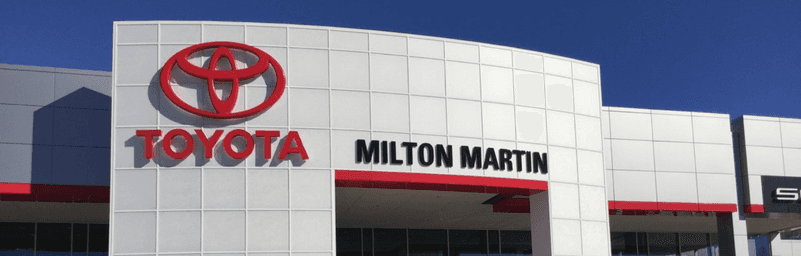
About Milton Martin Toyota
Since 1961, Milton Martin Toyota, our family-owned and operated dealership has proudly served the Georgia community, making us the oldest Toyota dealer in the state. Our commitment to excellence has earned us multiple President’s Awards and a place among the top Toyota dealers as part of the SET Elite. We make car buying easy with services like home delivery, online purchasing, and overnight test drives. When your vehicle needs maintenance, you can trust our 24 ASE-certified technicians and top-ranked customer service team. At Milton Martin Toyota, we are dedicated to providing an award-winning experience built on trust and expertise.
Related Articles:
Gainesville Guide: How to Find a Toyota Dealer You Can Trust
0 comment(s) so far on Your Essential Guide to Toyota Service in Gainesville, GA